The People We Learn to Walk Past
A woman sitting in a park with a tent beside her should not feel ordinary.
And yet, for many people, it has become part of the scenery. Something glimpsed through a car window or passed on the way to somewhere else. We notice it briefly, perhaps feel uncomfortable for a moment, and then continue on with the day because we do not know what to do with what we have seen.
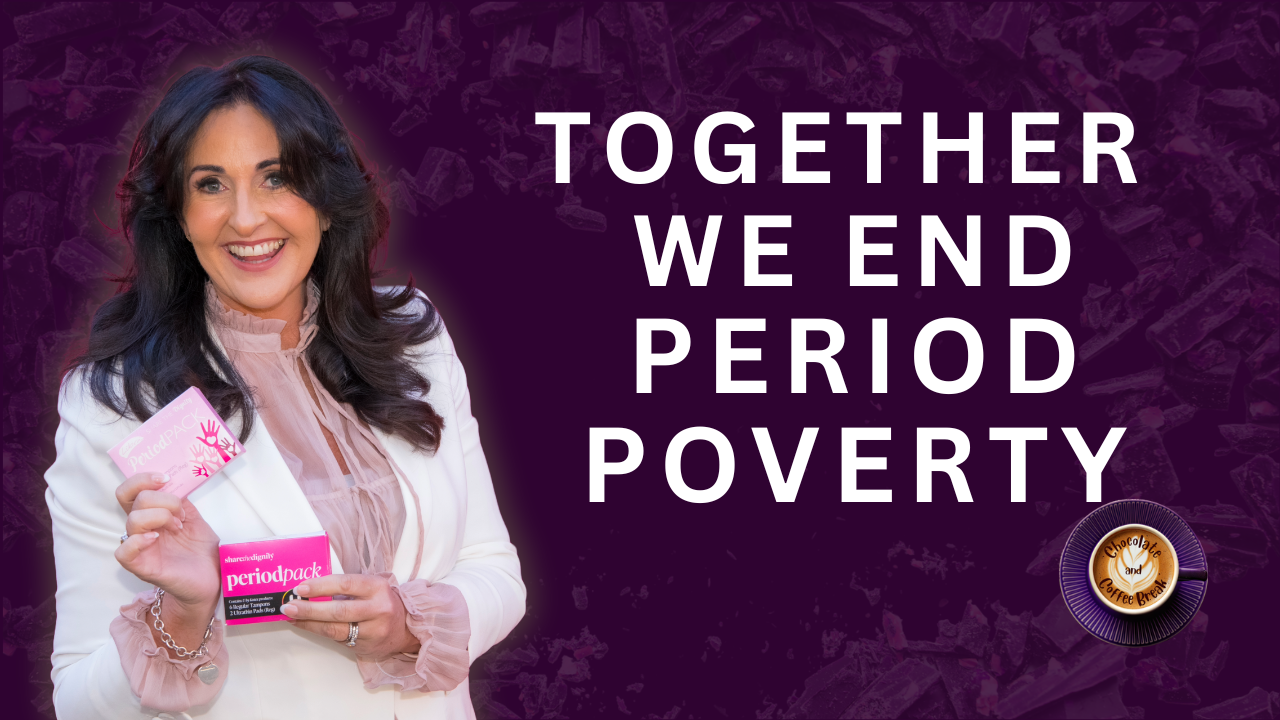
In this conversation with Rochelle Courtenay from Share the Dignity, the discussion began there. Not with statistics or campaigns, but with a woman in a park who had recently become homeless.
Rochelle stopped and spoke with her. They sat together and talked about how life had unravelled to this point. The woman shared that people often came close enough to stare, but not close enough to connect. Then she said something that cut through all the noise around homelessness, poverty, and public debate.
She said she would love a hug because she could not remember the last time someone had hugged her.
It is difficult to hear something like that and not feel the deeper loneliness underneath it.
Not just the loneliness of homelessness, but the loneliness of becoming invisible.
The Quiet Shame People Carry Alone
The conversation moved into the work Share the Dignity has been doing around period poverty, but underneath it was a larger question about dignity itself.
Who gets to move through the world with ease, and who quietly disappears from view?
Many people listening will never have had to think about missing school because they could not afford period products. They may never have considered what it means to navigate work, sport, university, or homelessness while carrying shame around something completely natural.
That is partly because we are still uncomfortable talking openly about menstruation. Silence has a way of making problems feel smaller or less urgent than they really are. If people are not speaking about something, it becomes easier to imagine it is rare, isolated, or somehow somebody else’s issue.
But one of the strongest moments in this episode came when Rochelle shared that one in four women in Australia have experienced period poverty. Not one in four women somewhere else. Here.
That number forces the conversation out of abstraction and into ordinary life.
The woman sitting beside you at work may know what that feels like. The teenager struggling at school may know what that feels like. The mother trying to hold everything together may know what that feels like.
The conversation also touched on older women becoming homeless after separation, rising living costs, or circumstances shifting unexpectedly. Again, it brought us back to something uncomfortable but true: many people are far more vulnerable than we like to believe.
We often speak about hardship as though it happens to “other people,” but the distance between stability and struggle is not always very wide.
Compassion Without Distance
There is a temptation when talking about compassion to keep everything soft and uplifting.
This conversation did not do that.
It sat in the tension between kindness and avoidance.
Rochelle spoke about how easily people stop seeing one another. How quickly someone can become part of the background once they are struggling publicly. There was a moment where she compared the way society responds to abandoned dogs with the way it responds to homeless people. A lost dog is collected, cleaned, fed, and cared for. Human beings are often left exposed to judgement, abuse, and indifference.
That comparison lands heavily because there is truth inside it.
Most people do not believe they are cruel. Yet many of us have become practiced at looking away. Not necessarily because we do not care, but because truly seeing another person’s pain asks something of us emotionally. It interrupts the neat separation between “their life” and “my life.”
The conversation also resisted turning people into projects.
There was no language about saving people or becoming heroes. Instead, Rochelle kept returning to smaller things: listening, acknowledging someone, making life a little easier, restoring dignity in practical ways.
That changes the shape of compassion entirely.
Not performance.
Not pity.
Presence.
The Small Things That Restore Dignity
There is a line in the episode where Rochelle talks about gratitude. About being grateful for making the bed because there is a bed to make. Grateful for cleaning the kitchen because there is food in the kitchen.
Not performative gratitude. Just awareness.
That awareness can shift the way we move through the world if we allow it to.
Not into guilt, but into attentiveness.
The conversation does not ask the audience to solve homelessness or carry the weight of every social issue. But it does quietly challenge the habit of emotional distance. The habit of assuming people are where they are because of simple choices or personal failure. The habit of moving too quickly to really notice each other.
Perhaps compassion begins there.
Not in having the perfect response, but in resisting the urge to disconnect from someone else’s humanity.
Brew the Change
This week’s Brew the Change challenge is connected directly to the heart of the conversation.
If you are able, pick up some period products during the Dignity Drive and donate them locally.
Not as charity performed at a distance, but as a recognition that dignity is built through ordinary practical care. Something as small as period products can affect whether a girl attends school, whether a woman goes to work, or whether someone already struggling feels even more isolated.
But there was another challenge underneath Rochelle’s words as well.
Stop and talk to someone you would normally walk past.
Not to fix them.
Not to rescue them.
Not to make yourself feel good.
Just to acknowledge them.
To ask their name.
To listen for a few moments.
To recognise that they are still a person worthy of dignity, conversation, and kindness.
That matters more than we sometimes realise.
Reflective Question
What would change in our communities if people felt seen before they reached breaking point?
Let love be the loudest voice.