
There are certain seasons of life that many people are taught to approach with fear. For women, midlife is often one of them.The messages can be subtle or direct. Stay young. Stay pleasing. Stay useful. Stay attractive. Keep giving. Keep everyone comfortable. And when a woman begins to move beyond those expectations, the story she …
There are certain seasons of life that many people are taught to approach with fear. For women, midlife is often one of them.
The messages can be subtle or direct. Stay young. Stay pleasing. Stay useful. Stay attractive. Keep giving. Keep everyone comfortable. And when a woman begins to move beyond those expectations, the story she is often handed is one of decline.
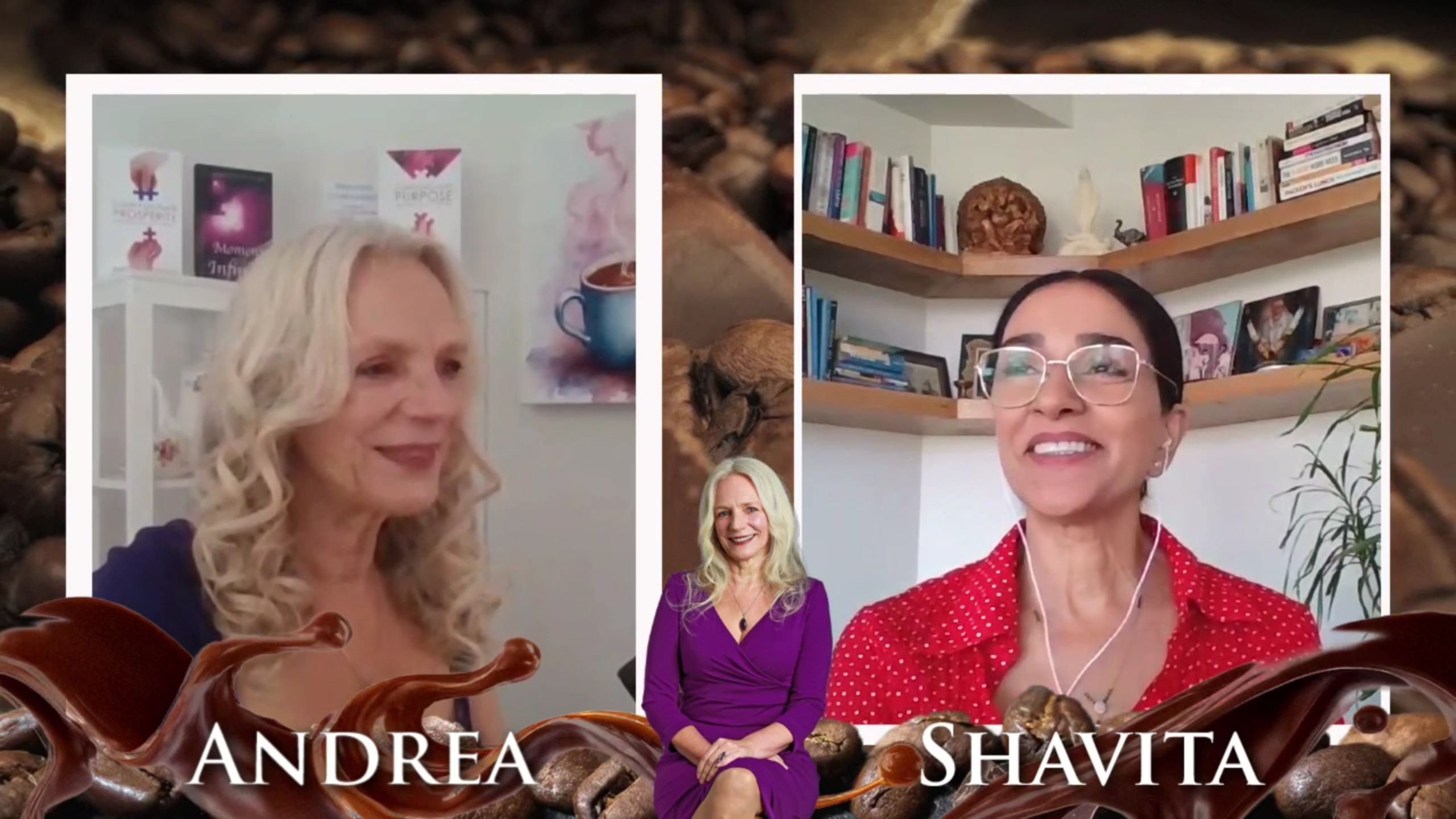
This week on Chocolate and Coffee Break, I had the pleasure of speaking with Shavita Kotak, author of Seven Wonders of Menopause. Our conversation challenged that story in a deeply human and hopeful way.
We did not speak about menopause as a medical problem to be solved. We spoke about identity, exhaustion, boundaries, self-worth, wisdom, and the possibility that this stage of life may not be an ending at all. It may be the beginning of a woman returning to herself.
When the Old Ways No Longer Fit
Many women spend decades giving. They give to children, partners, work, families, communities, and the endless needs of everyday life. They become capable, dependable, and often exhausted.
At some point, something begins to shift.
The pace that once seemed manageable becomes draining. The silence that once felt easier becomes heavy. The self-sacrifice that was once praised begins to feel costly. Shavita spoke about how many women reach a stage where the body starts speaking more loudly, asking for attention in ways that can no longer be ignored.
There is wisdom in that.
Sometimes discomfort is not the sign that life is falling apart. Sometimes it is the sign that a deeper truth is asking to be heard.
Outgrowing the Fear of Ageing
One of the most refreshing moments in our conversation came when Shavita reflected on a belief she had outgrown: the idea that life declines as you get older. Instead, she has come to experience that life can become richer, freer, and more authentic with age.
That matters, because so many people quietly carry dread about ageing.
What if we replaced that fear with curiosity?
What if maturity brings clarity rather than loss? What if it softens the need for approval? What if it gives us permission to care less about image and more about substance? What if it helps us become more honest about who we are and what we need?
There is a kind of freedom that often arrives when we stop trying to be who we were expected to be.
The Cost of Constant Giving
Another truth that stayed with me was her reflection that women are often rewarded for exhaustion.
Many women know this experience well. They are praised for carrying everything, admired for coping, and relied upon because they always manage somehow. Yet rarely are they encouraged to rest before burnout arrives. Rarely are they celebrated for boundaries. Rarely are they told that caring for themselves is not selfishness but wisdom.
This is not only a women’s issue. It is a human one.
How many people have built identities around being needed while neglecting what they themselves need? How many have mistaken depletion for love?
There comes a time when that model stops working. Perhaps that is not failure. Perhaps it is growth.
Wisdom Should Never Be Invisible
One of the most powerful themes in our conversation was the role of older women as carriers of lived wisdom.
Not women fading quietly into the background. Not women whose value has expired. But women who have lived through grief, reinvention, motherhood, disappointment, courage, love, mistakes, healing, and change. Women who have perspective that cannot be bought or borrowed.
In a culture that often celebrates novelty, we can overlook wisdom.
Yet homes, communities, workplaces, and younger generations all benefit when experience is honoured. There is dignity in maturity. There is strength in women who know themselves. There is something deeply needed in voices that are no longer interested in pretence.
My Reflection
What I appreciated most about this conversation was its gentleness and honesty.
There was no pressure to romanticise every part of change, and no need to dramatise it either. Instead, there was an invitation to see this season differently: not as something to survive with shame, but as something that may carry meaning.
I also believe the deeper lesson reaches beyond women and beyond midlife.
Many of us inherit beliefs that eventually become too small for the lives we are meant to live. Beliefs about our worth. Beliefs about love. Beliefs about how much we must prove, perform, or endure to deserve belonging.
We are allowed to outgrow those beliefs.
We are allowed to replace them with something kinder, steadier, and more true.
Brew the Change Challenge Invite
Think of a woman in your life who has lived a little more life than you have. A mother, an aunt, a neighbour, a mentor, or a friend.
Ask her one simple question:
What do you know now that you wish you had known earlier?
Then listen with your full attention.
You may receive more than advice. You may receive perspective, tenderness, courage, and a glimpse of what matters most.
Watch or Listen to the Full Episode
My conversation with Shavita Kotak was thoughtful, warm, and full of insight. If you have ever felt stretched thin, unseen, or ready for a new chapter, I believe it will meet you where you are.
Watch or listen here: https://youtu.be/OvPakQ8pW6I
Sometimes the next chapter begins when we stop fearing it and start listening to what it is asking of us.
Get in Touch with Us
We’d love to hear from you—share your thoughts or ask a question!


