The Strength People Praise Might Be Survival There are people who become very easy to admire. They cope well. They carry responsibility. They show up for everyone else. They keep functioning when life becomes difficult. They become dependable, capable, resilient. And often, nobody asks what it cost them to become that way. That tension sat …
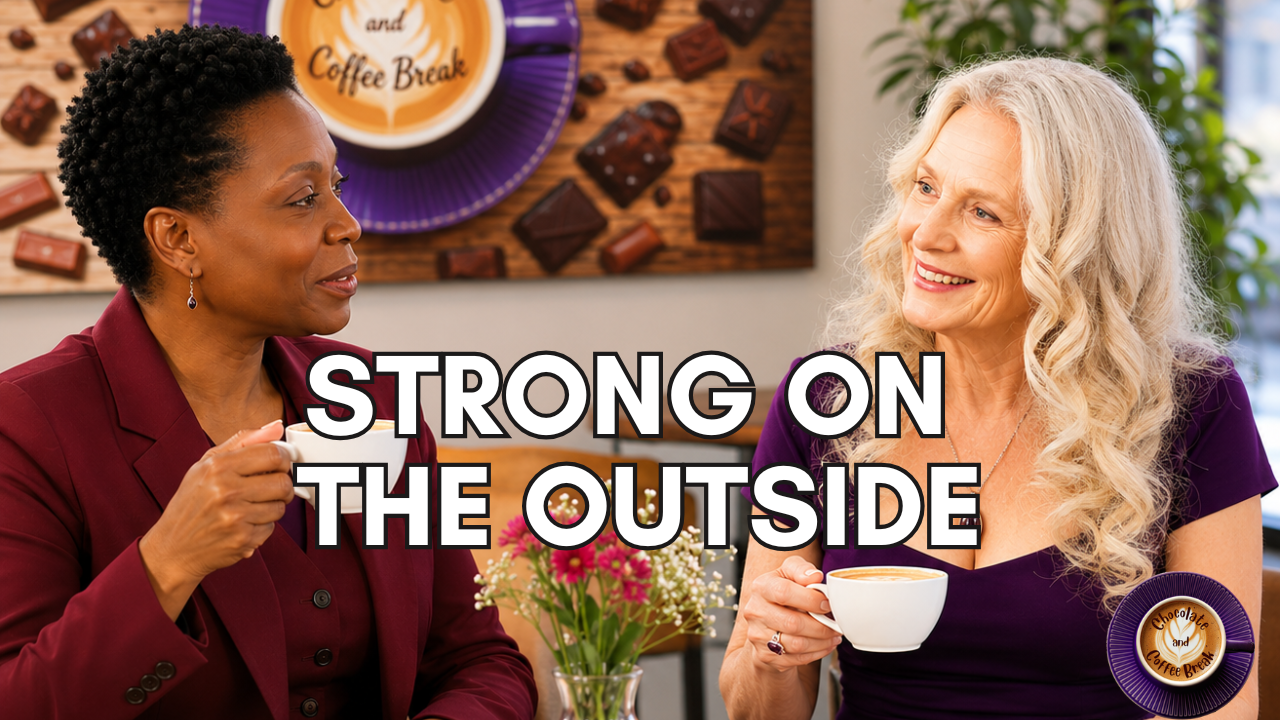
The Strength People Praise Might Be Survival
There are people who become very easy to admire.
They cope well. They carry responsibility. They show up for everyone else. They keep functioning when life becomes difficult. They become dependable, capable, resilient.
And often, nobody asks what it cost them to become that way.
That tension sat quietly underneath my conversation with Kabinga Mazaba.
At one point, she spoke about survival teaching her strength while also teaching her disconnection from self. It was one of those moments that feels uncomfortably recognisable because many people understand exactly what that means, even if they have never said it aloud.
Survival can become an identity before we realise it has happened.
Home Is Not Always a Place
Kabinga has lived across Zambia, South Africa, Scotland, and Australia. Listening to her speak about those experiences, I kept thinking about how often people imagine belonging as something external. A location. A community. A place where acceptance finally arrives.
But movement changes people.
Every culture teaches you something about yourself. Every transition quietly asks who you are willing to become in order to fit, connect, or survive. Over time, many people become skilled at adapting to environments while slowly losing touch with themselves underneath the adaptation.
What made this conversation so compelling was the way Kabinga described home no longer as somewhere outside herself, but as an inner sanctuary. A place where she no longer had to perform, prove, or earn her worth.
There was something deeply human in that.
Because even people who have never crossed borders understand the exhaustion of trying to belong.
Children feel it in families where emotions are not safe to express. Teenagers feel it while trying to become acceptable versions of themselves. Adults feel it in workplaces, relationships, communities, and cultures that reward performance more than presence.
Many people spend years trying to find externally what can only truly be built internally.
The Silence People Inherit
Kabinga spoke honestly about surviving childhood sexual abuse and growing up in environments where difficult things were not discussed openly.
What gave the conversation its emotional depth was that she did not reduce herself to what happened to her. Nor did she rush toward tidy inspiration.
Instead, she spoke about the long process of understanding what survival had taught her.
Strength, yes.
But also silence. Shame. Disconnection. The pressure to keep functioning while carrying pain privately.
That feels important because society often praises resilience without recognising how frequently resilience is born from necessity rather than choice.
People are admired for being “strong” while quietly carrying emotional burdens nobody around them fully sees.
And when someone becomes highly capable at surviving, others often stop noticing that survival is still taking place.
Kabinga described eventually going back to her younger self and speaking words she had needed to hear for decades: that what happened was not her fault.
Not from society.
Not from another person.
From herself.
That moment stayed with me because adulthood is rarely as separate from childhood as we pretend. Many adults are still living in conversation with younger versions of themselves who never fully felt safe, valued, or seen.
Forgiveness Without Pretending It Was Fine
Forgiveness can become one of those words people use carelessly.
Sometimes it is offered too quickly. Sometimes it is spoken about as though healing means pretending harm no longer matters.
That was not what this conversation held.
Kabinga spoke honestly about resisting forgiveness because it felt like letting people “get away with it.” But eventually she realised unforgiveness was not imprisoning the people who hurt her. It was imprisoning her.
There is an uncomfortable truth inside that.
Sometimes holding onto pain can begin to feel safer than releasing it because pain at least feels familiar. Letting go asks something vulnerable of us. It asks us to imagine a future that is not entirely organised around what happened.
That does not erase accountability.
It does not excuse harm.
It does not make suffering acceptable.
But it does create the possibility of freedom.
Brew the Change : The Quiet Urge to Fix Other People
Toward the end of the conversation, Kabinga reflected on no longer feeling the need to fix everyone else.
That landed deeply because so many people spend years trying to manage, correct, rescue, or reshape others in order to feel secure themselves.
Sometimes the urge to fix people is really an attempt to stabilise our own discomfort.
But human beings rarely grow through control.
They grow through curiosity. Through dignity. Through being allowed to become.
That became the heart of this episode’s Brew the Change challenge.
This week, Brew the Change by letting someone be who they are — without fixing, correcting, or trying to change them.
Choose one conversation and simply listen.
Not to prepare your response.
Not to persuade.
Not to reshape the other person into someone more comfortable for you.
Just listen.
Because every person sitting across from us has roots we cannot see.
And perhaps compassion begins there. Not in having all the answers, but in allowing another human being enough space to arrive honestly in front of us.
Not perfectly.
Not performatively.
Just honestly.
The Space Between Being Seen and Being Known
Sometimes people spend years trying to be understood while hiding the very parts of themselves that most need understanding.
Perhaps that is why conversations like this matter.
Not because they solve anything neatly.
Not because pain suddenly disappears.
But because every now and then, someone speaks honestly enough for another person to feel a little less alone in their own story.
And maybe that is where belonging begins.
Get in Touch with Us
We’d love to hear from you—share your thoughts or ask a question!