What’s Brewing in This Episode What does belonging actually require? In this conversation, Andrea Putting sits down with Peter Mousaferiadis to explore culture, identity, belonging, and the quiet harm of being placed in the category of “other.” Peter shares how growing up as the child of Greek migrants shaped his understanding of difference, discrimination, and …
What’s Brewing in This Episode
What does belonging actually require?
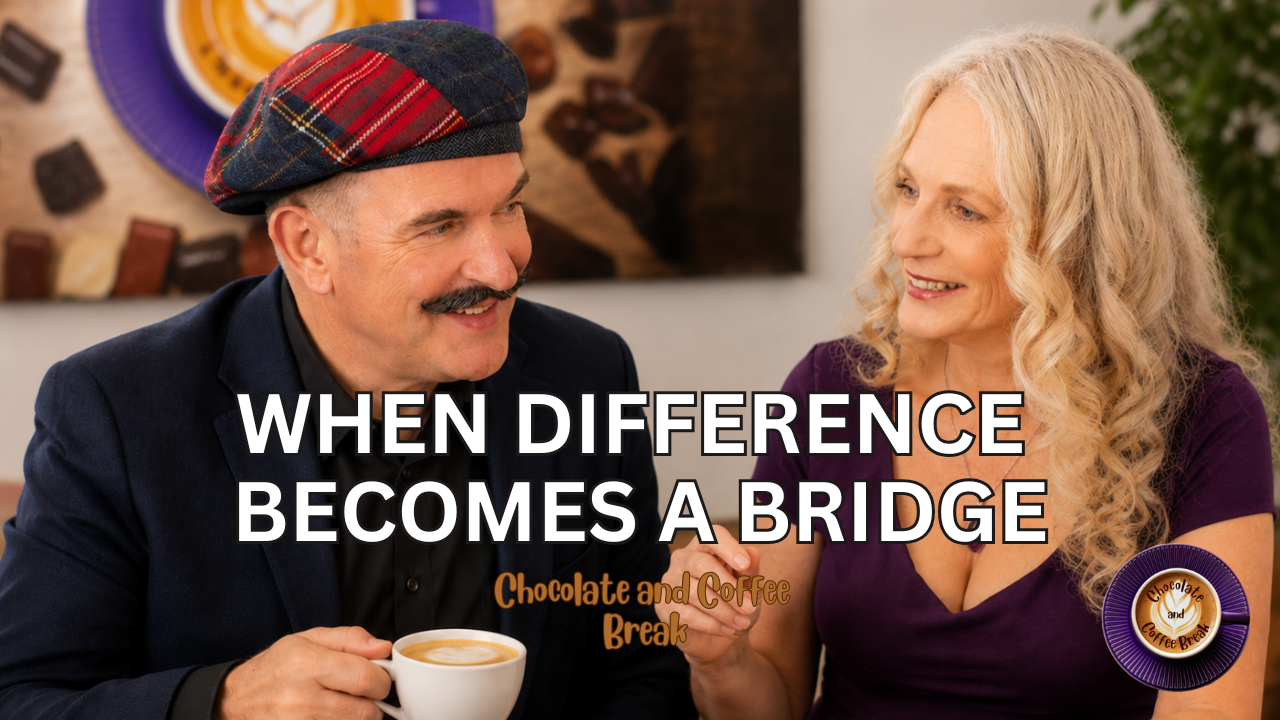
In this conversation, Andrea Putting sits down with Peter Mousaferiadis to explore culture, identity, belonging, and the quiet harm of being placed in the category of “other.”
Peter shares how growing up as the child of Greek migrants shaped his understanding of difference, discrimination, and community. From his family’s milk bar to his life in music and cultural work, the conversation opens a deeper question: can difference become something that connects us rather than something we fear?
Together, Andrea and Peter reflect on music as a bridge, culture as a source of dignity, and the importance of meeting people with curiosity before judgement.
Guest Bio
Peter Mousaferiadis is a global thought leader and advocate for intercultural understanding. He is the Founder and CEO of Cultural Infusion, established in 2002, and has spent his life championing culture as a driver of social cohesion and innovation.
His work includes the launch of Cultural Infusion’s Atlas, the world’s first holistic diversity analytics platform, in 2019. Peter has received many accolades, including the United Nations Alliance of Civilizations Intercultural Innovation Award, the Global Business and Interfaith Peace Award, and the Centre for Intellectual Excellence’s Inclusive Leadership Award.
He also has a background as a composer, conductor, creative director and producer.
Brew the Change Challenge
This week, let music be the bridge.
Share a coffee or a piece of chocolate with someone and ask them to play you a piece of music from their culture or childhood — and tell you why it matters to them.
Don’t analyse it.
Don’t compare it.
Just listen.
Watch on YouTube
Watch the full episode here:
https://youtu.be/3D1N6aMCE3M
The Limits of the Boxes We Create
During my conversation with Peter Mousaferiadis, we touched on the idea of millions of people being classified simply as “Other” within census data. There is a practical reason for that category to exist, but the language itself reveals something deeper. “Other” tells us very little about who a person is. It merely tells us that they do not fit comfortably into the categories that came before them.
Most of us know that feeling in one form or another.
For some, it comes through migration or culture. For others, it comes through family dynamics, education, disability, faith, class, sexuality, grief, or life circumstances that place them outside what is considered normal. The details vary, but the experience is surprisingly familiar. There is often a moment when a person becomes aware that they are standing slightly outside the circle, looking in.
What happens next is important.
Some people spend years trying to earn their place inside the circle. Others withdraw from it altogether. Some become angry. Some become invisible. Some learn to perform a version of themselves that feels easier for others to accept.
Very few people escape the tension entirely.
Perhaps this is why belonging remains such a powerful and sometimes painful subject. We are not only asking whether others will accept us. We are also asking whether acceptance requires us to become someone else.
What We Discover Before We Understand
Peter’s story offered another possibility.
Growing up in his family’s milk bar, surrounded by people from different backgrounds, he experienced both community and exclusion. Those experiences could easily have reinforced the idea that difference creates division. Instead, they seem to have nurtured a lifelong curiosity about what happens when people move toward each other rather than away from each other.
That curiosity eventually found expression through music.
There is something worth paying attention to in that. Music rarely begins with explanation. It begins with experience. A song can cross cultural, linguistic and social boundaries before anyone fully understands its history. We often encounter the humanity before we encounter the category.
Perhaps that is part of its power.
Many of the barriers between people are maintained by distance. The less we know about one another, the easier it becomes to fill the gaps with assumptions. The less contact we have with people whose lives differ from our own, the more likely we are to rely on labels to do the work that relationship was meant to do.
Listening Before Judging
That thought sits beneath this week’s Brew the Change challenge.
Share a coffee or a piece of chocolate with someone and ask them to play you a piece of music from their culture or childhood — and tell you why it matters to them.
Don’t analyse it.
Don’t compare it.
Just listen.
The challenge is not really about music. It is about creating a small moment where another person’s story has room to breathe. Music simply provides the doorway.
What makes the challenge meaningful is that it asks us to engage with another person’s experience before we evaluate it. In a culture that often rewards quick opinions and immediate judgements, that is no small thing. Listening without comparison requires a different kind of attention. It asks us to be present long enough for curiosity to replace assumption.
Will a single conversation solve the problem of division? Of course not.
But belonging has never been built through grand declarations alone. More often, it grows through ordinary moments when someone feels heard, welcomed, respected, or understood. It grows when people discover they do not need to abandon themselves in order to be accepted.
The longer I think about belonging, the less convinced I am that it can be manufactured through policies, slogans or categories, however necessary those things may be. Belonging seems to emerge from something much more relational. It grows in the space created when people become willing to encounter one another as human beings rather than representatives of a group.
Perhaps that is why the question remains so compelling.
Not whether people belong.
But what kind of communities we create when they do.
Get in Touch with Us
We’d love to hear from you—share your thoughts or ask a question!