People often speak about belonging as though it is a place. We talk about finding our tribe, finding our people, finding our community. The language itself suggests that belonging already exists somewhere out there, waiting for us to discover it. If we look hard enough, move far enough, or meet the right people, we will …

People often speak about belonging as though it is a place.
We talk about finding our tribe, finding our people, finding our community. The language itself suggests that belonging already exists somewhere out there, waiting for us to discover it. If we look hard enough, move far enough, or meet the right people, we will eventually arrive.
It is an appealing idea because it places belonging somewhere beyond ourselves.
If we have not found it yet, perhaps we simply have not reached the right destination.
Yet life has a way of complicating that theory.
There are people who move across the world and quickly feel at home. There are others who spend decades in the same place and never quite feel that they belong. Some people walk into a room full of strangers and feel welcomed within minutes. Others sit among familiar faces and still experience a quiet sense of distance.
The more I listen to people’s stories, the less convinced I am that belonging is a place we discover.
Perhaps belonging is something people create.
Presence Is Not the Same as Participation
One of the challenges in talking about belonging is that we often confuse presence with participation.
A person can be physically present and still feel disconnected.
A child can attend school every day and never feel accepted. An employee can work within a team and never feel heard. A migrant can settle into a new country while continuing to feel like an outsider. An older person can sit at a family gathering and struggle to follow the conversation.
Presence tells us where a person is.
Participation tells us whether they feel part of what is happening.
That distinction surfaced repeatedly during my conversation with Khatija Halabi. Her experiences ranged from growing up in multicultural South Africa to building a life in regional Australia, from supporting migrant women to working as an audiologist helping people navigate hearing loss. On the surface, these appear to be very different stories. Underneath them sits the same question: what allows people to participate fully in life?
The answer was never simply access.
It was connection.
The Distance Between Categories and People
Human beings have always sorted one another into categories.
Sometimes those categories help us navigate a complicated world. They provide context and help us understand something about a person’s experience. The difficulty begins when categories become the whole story.
It is remarkably easy to form opinions about people we have never met.
A religion becomes a headline.
A nationality becomes a stereotype.
A political belief becomes an assumption.
A diagnosis becomes an identity.
The further away people are from us, the easier it becomes to reduce them to a label. Curiously, the opposite also seems true. The closer people come, the harder it becomes to simplify them.
That may explain why storytelling remains so powerful. When people hear a story directly from another human being, categories begin to lose some of their certainty. The person in front of us becomes more complicated than the assumptions we carried into the conversation.
Not necessarily easier to understand.
But harder to dismiss.
Communities Are Built Through Small Decisions
There is a tendency to imagine community as something large and collective.
We think about organisations, institutions, neighbourhoods, and systems. Those things matter. They shape the environments in which people live.
Yet communities are ultimately built through individual decisions.
Someone introduces themselves.
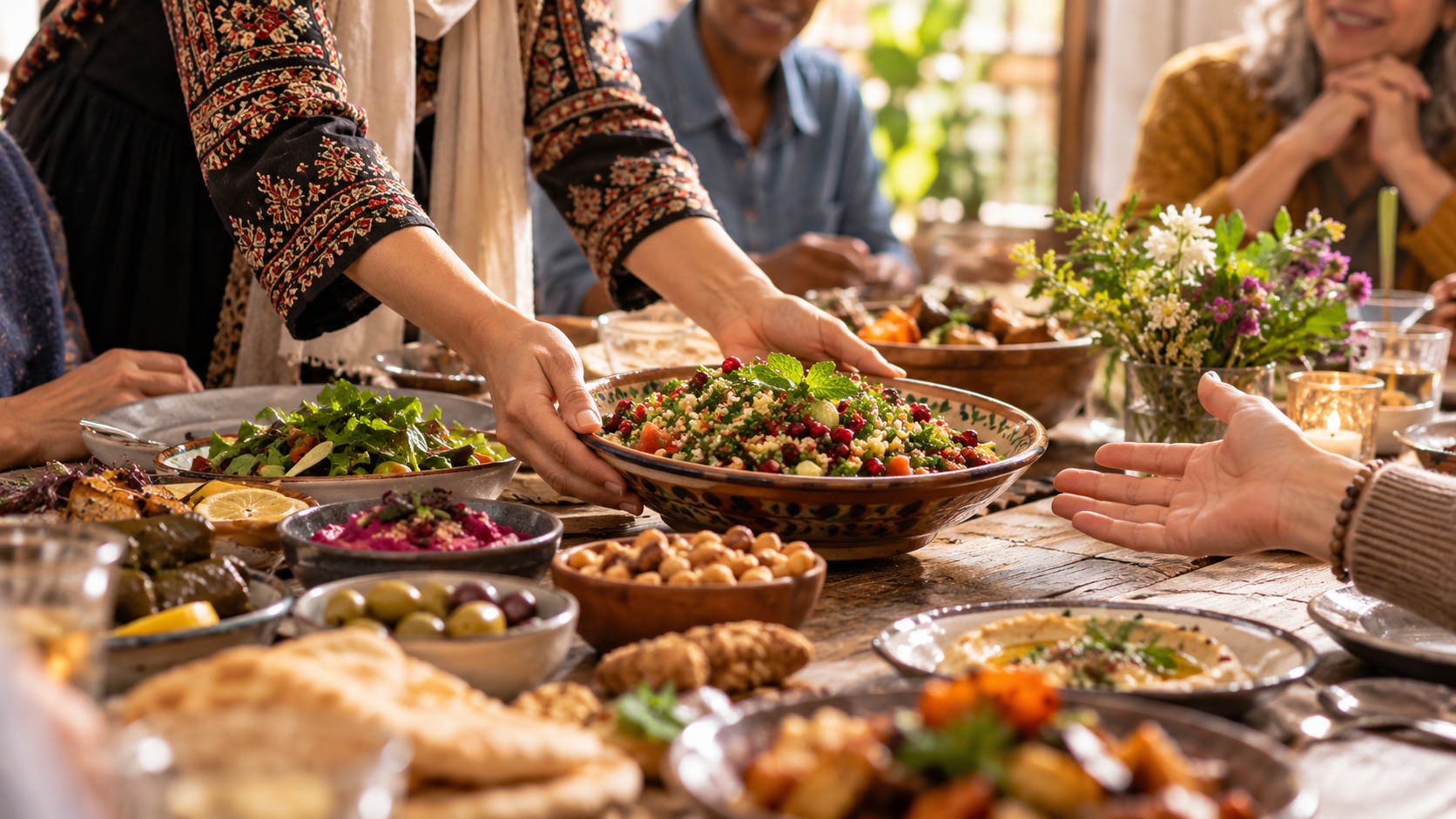
Someone extends an invitation.
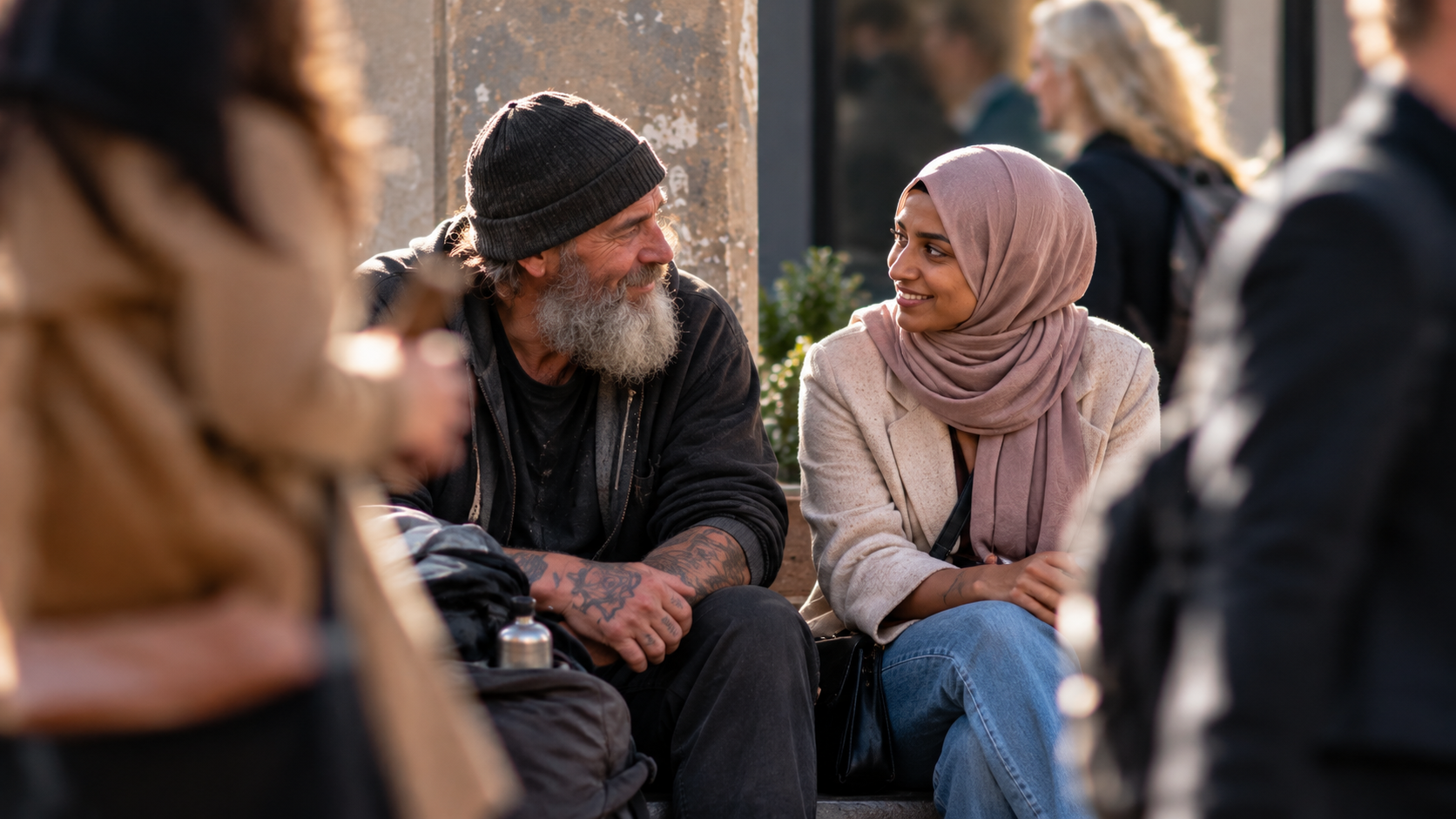
Someone notices the person standing alone.
Someone asks a question rather than making an assumption.
Someone creates space.
These actions appear insignificant when viewed individually. Yet when they accumulate, they begin to shape the culture around us.
The phrase “soft landing” emerged during the conversation as a way of describing those moments. A soft landing is not a policy. It is not a programme. It is not a strategy.
It is the experience of being met by another person who chooses to make room for you.
Why the Brew the Change Matters
This week’s Brew the Change challenge is to create a soft landing for someone.
At first glance, it feels almost too simple.
Notice someone who may be standing on the edge. A new neighbour. A quiet colleague. Someone navigating change. Someone who simply has not been fully heard.
Offer one small act of belonging.
The challenge matters because belonging is rarely created through grand gestures. More often, it emerges through a series of ordinary moments that become meaningful in hindsight.
Many of us can remember the people who helped us feel welcome. We remember the person who invited us to sit down, introduced us to others, or took the time to ask our name when nobody else did. The gesture may have lasted only a few minutes.
The impact can last years.
The Work Is Never Finished
There is something slightly uncomfortable about the idea that belonging is created rather than found. If belonging is something waiting for us somewhere out there, then our task is simply to keep searching. If belonging is something people create, then responsibility enters the picture. Not responsibility for everyone’s experience. But responsibility for our own contribution.
The communities we long for are built, in part, through the choices we make every day. That does not mean every act of welcome will succeed. It does not mean every attempt at connection will be returned. Human relationships remain complicated. Communities remain imperfect. People continue to carry wounds, assumptions, fears, and histories that shape how they experience the world.
Perhaps that is why belonging remains such a powerful idea. Not because we have mastered it. Because we haven’t.
The question continues to sit there, waiting for us.
Can belonging be found?
Or is it something we create for one another, one conversation at a time?
Get in Touch with Us
We’d love to hear from you—share your thoughts or ask a question!
Tags:Khatija Halabi