Welcoming someone into a community matters. There is the first hello, the practical help, the invitation in and the reassurance that there is a place for them here. But what happens after that? There is a difference between being received by a community and becoming part of it. One of the things I wanted to …
Welcoming someone into a community matters. There is the first hello, the practical help, the invitation in and the reassurance that there is a place for them here.
But what happens after that?
There is a difference between being received by a community and becoming part of it. One of the things I wanted to explore with Tareq Hadhad was what happens in that space between welcome and belonging, particularly when someone has arrived having left almost everything familiar behind.
Tareq’s answer involved chocolate.
Arriving Doesn’t Mean Arriving Empty
When we meet someone who has had to rebuild their life, it can be easy to begin with what they need. There may be language to learn, systems to navigate, employment to find and relationships to build.
All of those things matter. But if that becomes the only way we see someone, we can miss what they have brought with them.
Tareq’s family had generations of experience making chocolate. His father was a chocolatier. Although the family was rebuilding in a place that was new to them, their skills hadn’t disappeared simply because the geography had changed.
They began making chocolate in their home kitchen, using ice-cube moulds and tubs, and taking what they made to farmers’ markets. People began lining up for it.
There is something important in that change of direction. The relationship between newcomer and community was no longer only about people providing help. Tareq and his family had something they could offer too.
That is where welcome begins to look more like belonging.
When Food Speaks Before We Do
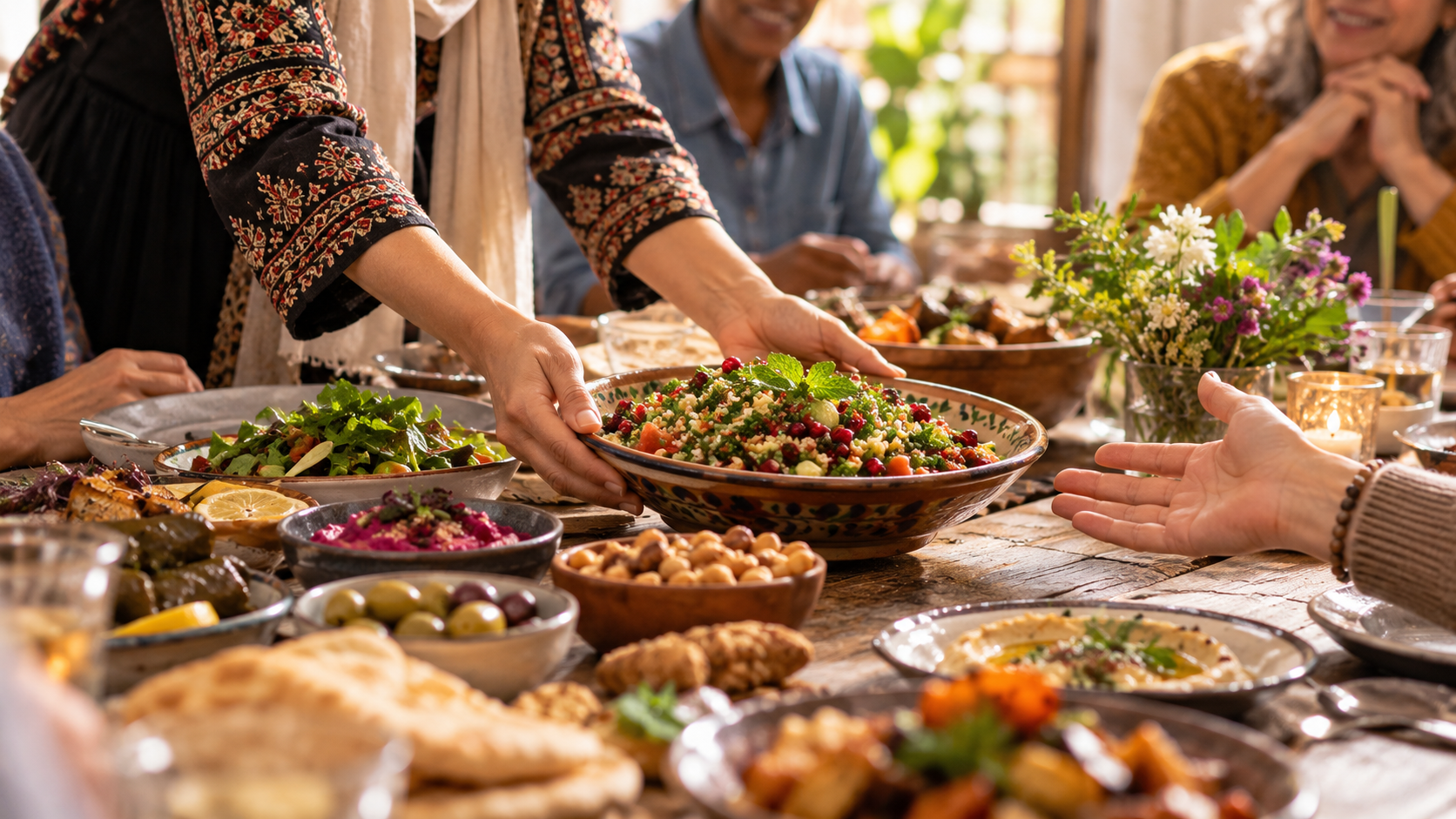
During our conversation, Tareq described food as an ambassador. I think most of us have experienced some version of that.
We may know very little about another person’s country, language or traditions, yet sit down with their food and immediately have somewhere to begin. We can ask what something is called, how it is made, whether it is eaten on special occasions or whether somebody’s grandmother made it differently.
Tareq described chocolate as being “like music”. It was something people already understood.
That didn’t mean everyone suddenly understood his family, Syria or what it meant to rebuild a life in Canada. Chocolate simply opened a door through which those relationships could begin.
There is an important distinction there. Connection doesn’t require us to understand everything about another person before approaching them. Sometimes we need an ordinary enough reason to begin.
Who Gets to Tell Us About Other People?
Our conversation also moved into a more difficult part of connection.
Tareq spoke about the assumptions and prejudices we can hold towards people who look different from us, practise another religion, come from another background or have another skin colour. He questioned what happens when most of what we know about another culture comes from somewhere other than the people who have actually lived it.
Information is everywhere. Relationship is something else.
I can read about someone’s country. I can follow the news. I can learn its history and know the names of its cities. None of that tells me exactly what it was like to grow up there, what happened around the family table, how neighbours greeted one another or which childhood memories still make someone smile.
Those things require people.
And sometimes they require us to sit with someone whose experience, beliefs or choices don’t neatly match our own.
Listening does not mean agreement. It does give us the opportunity to encounter a person rather than an assumption about them.
Belonging Includes Contribution
Perhaps this is one reason contribution matters so much.
Being welcomed says, there is room for you here.
Being able to contribute says, there is room for something of you here too.
That might be a skill, a recipe, a piece of knowledge, a different way of seeing something, practical help or an experience nobody else in the room has had.
For Tareq’s family, it happened to be chocolate. The chocolate gave other people something they could encounter first. Around it came conversations, relationships and eventually a business that carried something of both the family’s Syrian tradition and their new life in Canada.
The larger question is not really about chocolate at all.
When someone new enters one of our workplaces, neighbourhoods, groups or communities, do we only see the space we can make for them? Or are we curious enough to discover what might change because they are now part of it?
Brew the Change
This week’s Brew the Change makes that question wonderfully practical.
Get yourself a good block of chocolate. Get some Peace by Chocolate if you can. Share it with someone you don’t know well: a neighbour, a colleague or someone new to your community.
Don’t make it complicated. Offer the chocolate. Begin a conversation. Give them your attention.
Belonging begins when we take the time to know one another.
You can watch my full conversation with Tareq Hadhad here:
https://youtu.be/xNMAqacnzco
Pour yourself a cuppa, grab your favourite chocolate and join the conversation.
Let Love Be the Loudest Voice.
Get in Touch with Us
We’d love to hear from you—share your thoughts or ask a question!