Children Begin With an Open Hand There is something both beautiful and unsettling about watching young children together. Give them a playground, a few toys, or simply an empty space and they will often find a way to connect. They will invent games, include one another and, more often than not, simply enjoy being together. …
Children Begin With an Open Hand
There is something both beautiful and unsettling about watching young children together.
Give them a playground, a few toys, or simply an empty space and they will often find a way to connect. They will invent games, include one another and, more often than not, simply enjoy being together. They don’t arrive carrying opinions about who belongs and who doesn’t. They don’t begin by asking where someone comes from or what they believe. They are curious. They are open. They simply see another child.
As adults, we often describe children as innocent, but perhaps there is something more going on than innocence. Perhaps there is a kind of wisdom in that openness, a way of meeting the world that many of us slowly lose as we grow older.
That thought sat quietly underneath my conversation with Peter Nicholls.
The Lessons We Never Mean to Teach
On the surface, our conversation was about kindness, compassion and Peter’s work with children and communities. Underneath it was a much deeper question: if kindness comes so naturally to children, what happens to us as we grow up?
The answer is probably not simple. Life teaches us many things. We experience hurt and disappointment. We learn caution. We become busy and distracted. We begin to sort the world into people who are familiar and people who are not. We gather stories about who is safe and who isn’t, who belongs and who doesn’t.
Some of those lessons help us navigate the world. Others quietly close us off from one another.
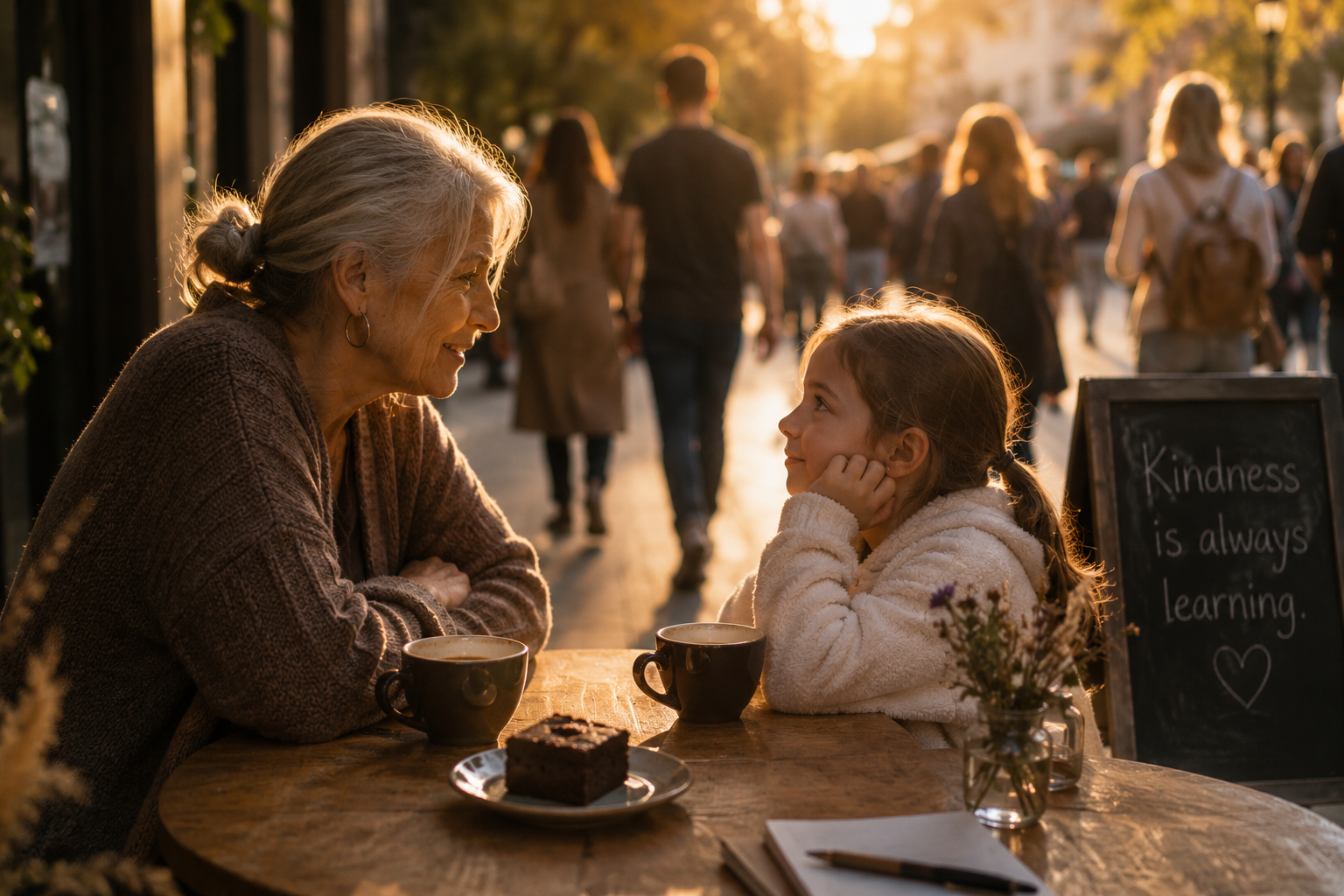
The uncomfortable truth is that children are learning these lessons from somewhere. They are learning from what they see and hear every day. They are watching how we speak about our neighbours, how we treat the person serving our coffee, whether we stop to help someone struggling with their bags, or whether we walk past because we are in a hurry.
Most of us don’t think of these moments as lessons. Yet children often do.
Somewhere Along the Way, We Complicate Things
I can still remember people who showed me kindness when I was young. I suspect most of us can. A teacher who noticed. A neighbour who made time for us. A grandparent who listened. The people themselves may have long forgotten those moments, but we haven’t. Small acts have a way of staying with us.
That is both a hopeful and sobering thought.
It means that the little things matter far more than we realise.
During our conversation, Peter spoke about putting children from different backgrounds together and simply letting them be children. They play. They laugh. They find common ground far more easily than adults often do.
Listening to him, I wondered whether we sometimes make human connection much more complicated than it needs to be.
Perhaps we spend so much time teaching children how to succeed, how to compete and how to protect themselves that we forget to nurture the things they already know. Kindness. Curiosity. Generosity. The simple act of seeing another person as someone worth knowing.
Changing the One Person in Front of Us
Peter’s organisation is called Change the One, and there is something profoundly hopeful about that idea.
We can become overwhelmed by the size of the world’s problems. Division, loneliness and misunderstanding can seem too large for any one person to address.
Yet most of our lives are lived in much smaller spaces.
At kitchen tables. In cafés. At school gates. In conversations with neighbours and friends.
These are the places where kindness either grows or withers. These are the places where children are watching us and deciding, often without words, what kind of world this is and what kind of people we become.
Perhaps changing the world has always begun this way. Not by trying to fix everything, but by choosing to see the person right in front of us.
The Small Things Children Remember
At the end of every episode of Chocolate and Coffee Break, we invite people to Brew the Change.
This week’s invitation is beautifully simple.
Let a child see you choose kindness.
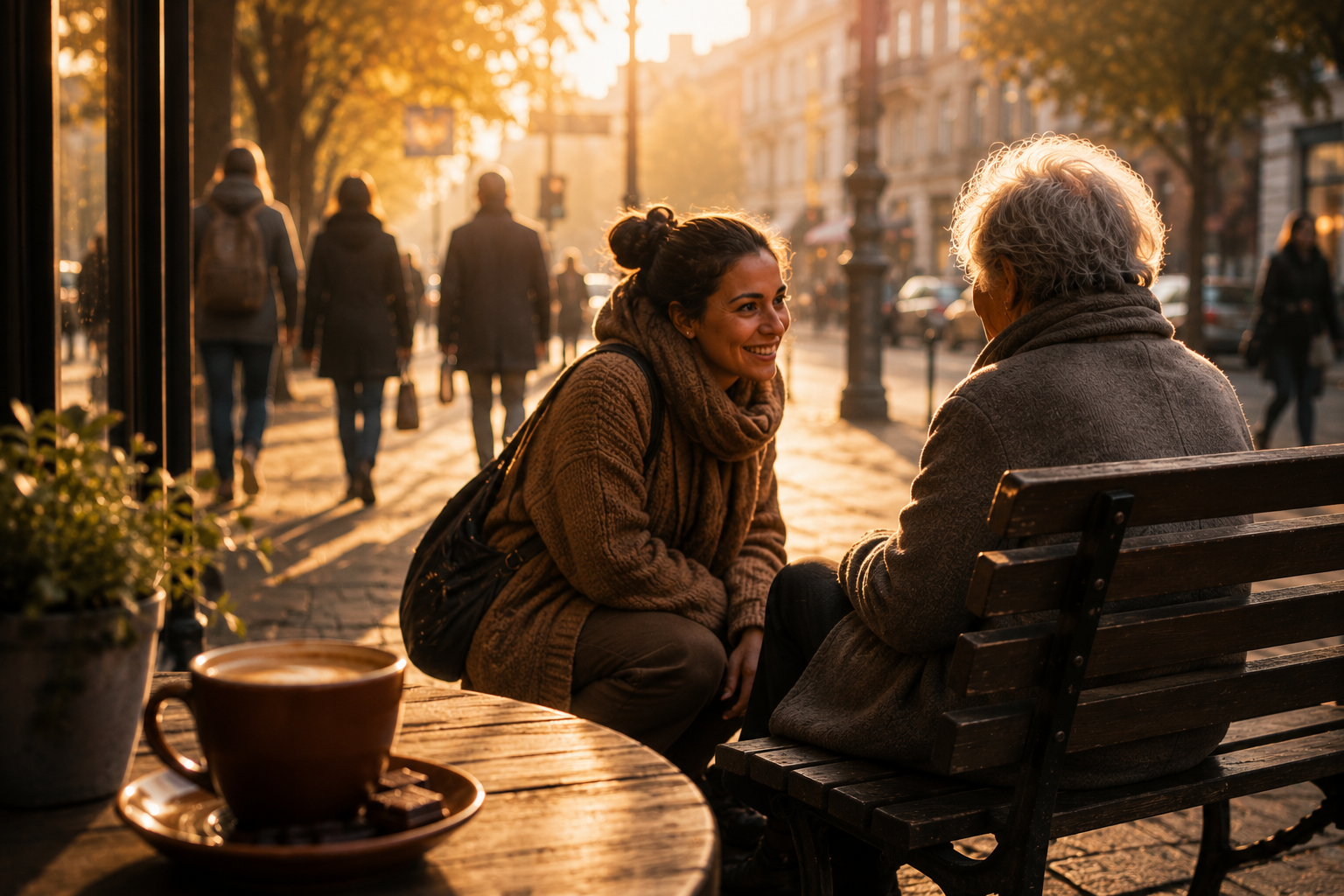
Hold the door for someone. Thank the person serving your coffee. Check on a neighbour. Include someone who seems to be sitting on the edge of things. Take the time to listen when it would be easier to rush on.
None of these things will make the news. They won’t solve every problem in the world.
But they do something important.
They remind us, and perhaps the children watching us, that other people matter.
What Kind of World Are We Showing Them?
Maybe that is where change begins.
Not in grand gestures or perfect words, but in the ordinary moments when we choose to act with kindness because another human being is standing in front of us.
Children are learning about the world every day. They are learning what it means to belong, what it means to care, and what it means to live alongside other people.
The question is not whether they are learning.
The question is what they are learning from us.
And perhaps that is the question worth carrying into the week ahead:
If kindness comes naturally to children, what kind of examples are we giving them to follow?
Watch the episode with Peter Nicholls on YouTube
Get in Touch with Us
We’d love to hear from you—share your thoughts or ask a question!