There is something deeply human about wanting the world to make sense. From the time we are children, we learn what is polite, what is respectful, what family looks like, how conversations happen, and how people show care for one another. Those lessons become so familiar that we rarely think of them as culture. We …
There is something deeply human about wanting the world to make sense.
From the time we are children, we learn what is polite, what is respectful, what family looks like, how conversations happen, and how people show care for one another. Those lessons become so familiar that we rarely think of them as culture. We simply call them normal.
Perhaps that’s why we can be so quick to judge. When someone behaves differently from what we expect, our first instinct is often to measure them against the only standard we’ve ever known. They seem rude. Distant. Loud. Quiet. Unfriendly. Cold. We rarely stop to ask whether we’re looking at another human being or simply looking through the lens of our own experience.
We all carry invisible rules
Most of us move through life without noticing the invisible rules we’ve inherited.
Some cultures teach children to speak openly and confidently. Others teach them to listen before speaking. Some see independence as a sign of maturity. Others see strength in remaining deeply connected to family and community. Some express gratitude constantly in words, while others communicate appreciation through actions so naturally that words are almost unnecessary.
None of these ways of being are accidental. They have been shaped over generations, carrying values that helped communities survive, belong and flourish.
The difficulty begins when we mistake familiarity for truth.
Belonging can become surprisingly complicated
During my conversation with Elee Joven, she described growing up between Guam and the Philippines before later moving to mainland America. Although she was an American citizen, the culture that shaped her life was far more community-oriented than the individualism she encountered after moving to California.
She spoke about trying to find the balance between the person she had always been and the person she thought she needed to become. There was the quiet temptation to adjust just enough to be accepted. To speak differently. To behave differently. To fit in.
That tension doesn’t belong only to migrants.
Many of us have found ourselves in workplaces, families, schools or communities where we quietly wonder how much of ourselves needs to change before we finally belong.
When normal is all we’ve ever known
One of the simplest moments in our conversation revealed something much larger.
Elee spoke about moving to America and constantly being reminded to say “please” and “thank you.” In the culture she had grown up in, helping one another was simply expected. Those words weren’t absent because people lacked gratitude. They weren’t woven into everyday interactions in quite the same way. Yet what was entirely normal for her could easily be interpreted by someone else as rudeness or ingratitude.
Most of us never stop to consider that what feels normal isn’t universal.
We grow up believing there is a right way to greet people, to show gratitude, to speak to our elders, to disagree, to offer help or to ask for it. Those ways become so familiar that we stop seeing them as culture at all.
We simply call them normal.
Then someone comes along whose normal is different, and suddenly we find ourselves making judgements that say more about us than they do about them.
Curiosity leaves room for another story
Curiosity doesn’t ask us to abandon our own values.
It simply asks us to hold them with enough humility to recognise that someone else’s way of living may have been shaped by a different history, different relationships and different experiences.
There will always be behaviours that deserve to be challenged. Understanding another person’s culture does not mean abandoning discernment. But many of the misunderstandings we experience every day are not born from bad intentions. They begin with assumptions that have never been questioned.
Curiosity interrupts that pattern. It slows us down just long enough to ask a different question before reaching a conclusion.
The conversation begins with one question
That is why this week’s Brew the Change feels so natural.
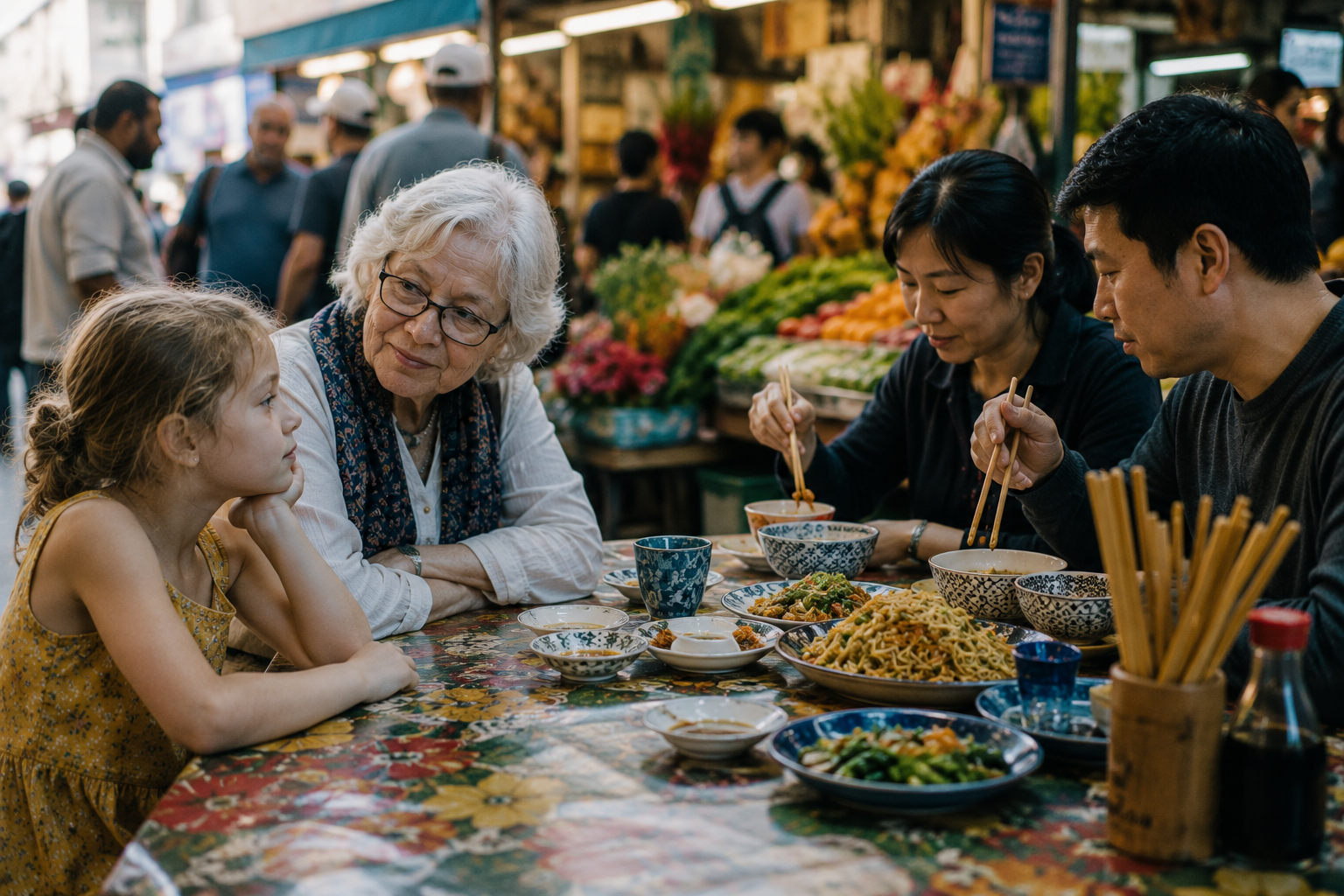
Share a chocolate and coffee with someone whose background or life experience is different from yours and ask them one question:
“What’s something people often misunderstand about where you come from?”
Then simply listen.
No fixing.
No debating.
No comparing stories.
Just listen long enough to understand another human being a little better.
The answer may not change your opinion about everything.
It may simply remind you that behind every culture, every custom and every way of seeing the world is a person whose life has been shaped by experiences very different from your own.
Different has never been the opposite of human.
Sometimes it is simply another way of being human.
Get in Touch with Us
We’d love to hear from you—share your thoughts or ask a question!