There are moments that divide life into before and after. An accident. A diagnosis. The death of someone we love. Divorce. Redundancy. Retirement. Becoming a carer. Ageing. Sometimes the change is visible to everyone. Sometimes very few people know what has happened. Whatever the circumstances, life can look different almost overnight. What we talk about …
There are moments that divide life into before and after.
An accident. A diagnosis. The death of someone we love. Divorce. Redundancy. Retirement. Becoming a carer. Ageing. Sometimes the change is visible to everyone. Sometimes very few people know what has happened.
Whatever the circumstances, life can look different almost overnight.
What we talk about less often is what happens in the space between the person whose life has changed and everyone around them.
People can become uncertain. They do not know what to say. They worry about asking the wrong question or using the wrong words. They want to help, but do not know what help is needed. Sometimes they become so conscious of what has changed that they begin to relate to that change rather than to the person they have always known.
And somewhere inside all of that uncertainty is a human being who may be thinking: I’m still here.
When one thing becomes the whole story
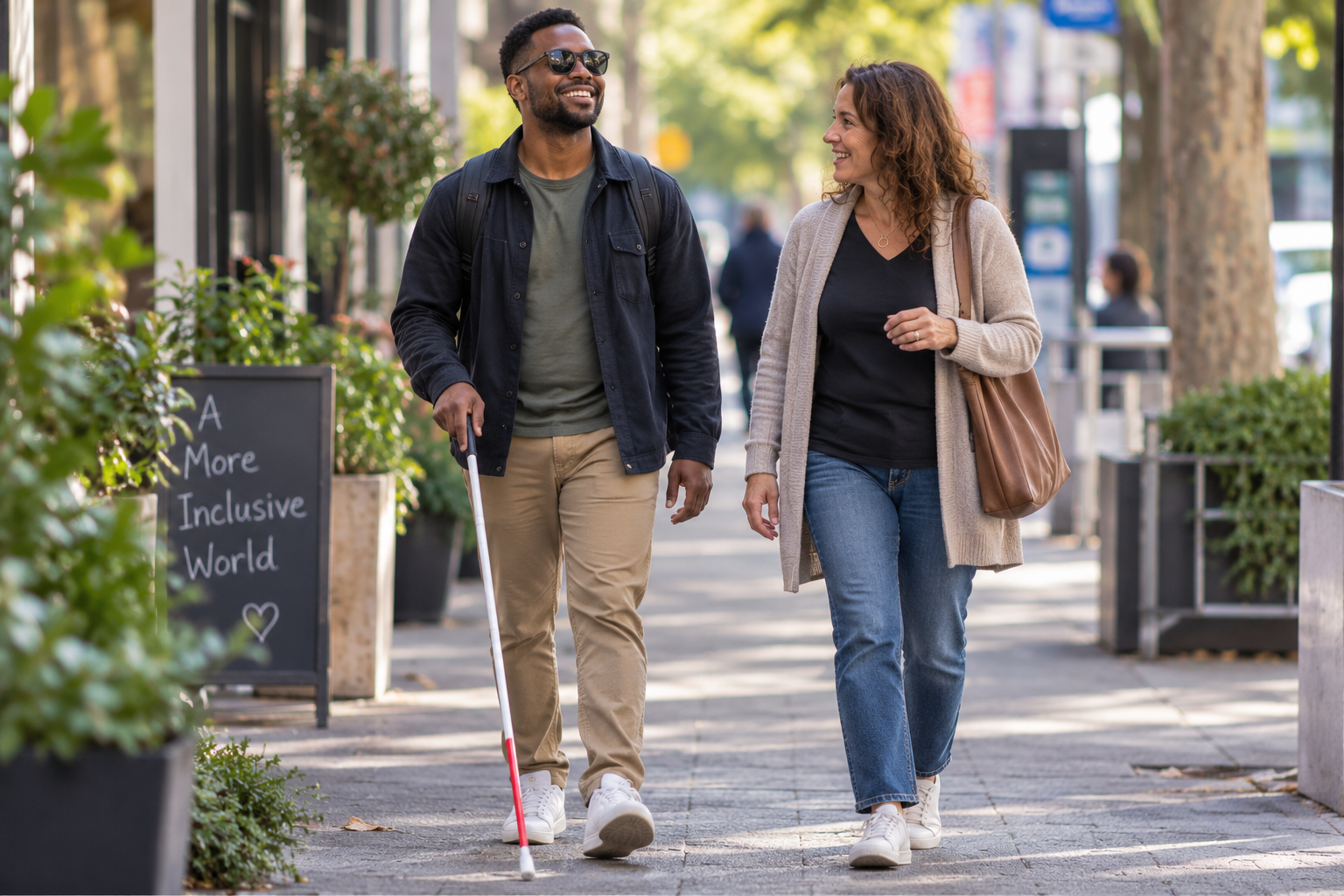
In my conversation with Kijuan Amey, I asked whether the way people treated him changed after the motorcycle accident that left him blind at 25.
His answer was immediate.
“Yes, absolutely.”
He described having to tell people, “I’m still an adult, so don’t treat me like a child. I just need to learn how to navigate without sight.”
His circumstances had changed enormously. He had to learn new ways of navigating the world. There were things he could no longer do in the way he had done them before.
But blindness had not erased the person who existed before the accident.
Kijuan was still the man who had loved sport since he was five and played drums since he was seven. He was still adventurous, funny and independent. Today he competes in adaptive sport, has tried archery and downhill skiing, has steered a sailboat and would still like the opportunity to fly a small plane.
Blindness is part of his story. It is simply not the whole story.
That distinction matters far beyond disability.
A woman becomes a widow, and suddenly every conversation begins with her loss.
Someone loses their job, and people who once saw their experience and capability begin to see unemployment.
A person receives a serious diagnosis, and friends start asking about appointments, treatments and test results while forgetting to ask about everything else in their life.
Someone retires after decades in a profession and discovers how much of the way others saw them was attached to their job title.
The new fact may be completely true. The problem comes when true becomes complete.
When helping takes away someone’s agency
There is another part of this that can be uncomfortable to examine because our intentions may be good.
We want to help.
Kijuan tells a very funny story about waiting outside a bathroom he knew well. When someone came out, they immediately tried to help him. The only assistance he actually needed was for the person to move out of his way.
His conclusion was simple: because people do not understand what he can and cannot do, “they just overdo.”
There is a difference between making help available and deciding what another person needs.
We can do this in all sorts of circumstances.
We stop inviting someone because we assume it will be too difficult for them. We take over a task without asking. We lower our expectations. We speak for them. We avoid a subject because we think they will not cope with it.
We may call that kindness.
The other person may experience it very differently.
Perhaps one of the most respectful questions we can ask is simply: What do you need from me?
And then allow the answer to belong to them.
Sometimes people disappear
There was one moment in my conversation with Kijuan that said an enormous amount in very few words.
I asked him:
“What else disappeared in your life besides your sight?”
“People.”
He went on to talk about his girlfriend disappearing from his life. He also lost the Air Force career he loved and the path he had been following towards becoming a pilot.
There are practical losses that come with major changes in life. Then there are the losses nobody expects.
Friendships change. Invitations stop. People who used to call become less frequent visitors.
Sometimes people withdraw because they do not know what to say. Perhaps they are frightened of saying the wrong thing. Perhaps another person’s circumstances confront them with something they would rather not contemplate in their own lives.
Whatever the reason, our fear of getting a relationship wrong can become the very thing that damages the relationship.
We do not always need the right words.
Sometimes we just need to remain.
Who gets to decide who someone has become?
Towards the end of our conversation, I asked Kijuan what it means to truly see another person.
He spoke about seeing someone for who they really are rather than who we think they are.
Then he described himself: creative, passionate and charismatic.
What he did not want was for someone to see a blind man and immediately decide that he must be helpless.
“I want you to allow me to show you what I can do first. If I need your assistance, trust me, I will definitely tell you.”
There is something important in the word allow.
Allow me to show you.
It places the person themselves back at the centre of their own identity.
Perhaps seeing someone does not mean knowing who they are. It means remaining curious enough to let them keep showing us.
Who are you now?
What matters to you?
What can you do?
What do you need?
What hasn’t changed?
We may discover that the answers are quite different from the ones we had supplied for them.
Brew the Change
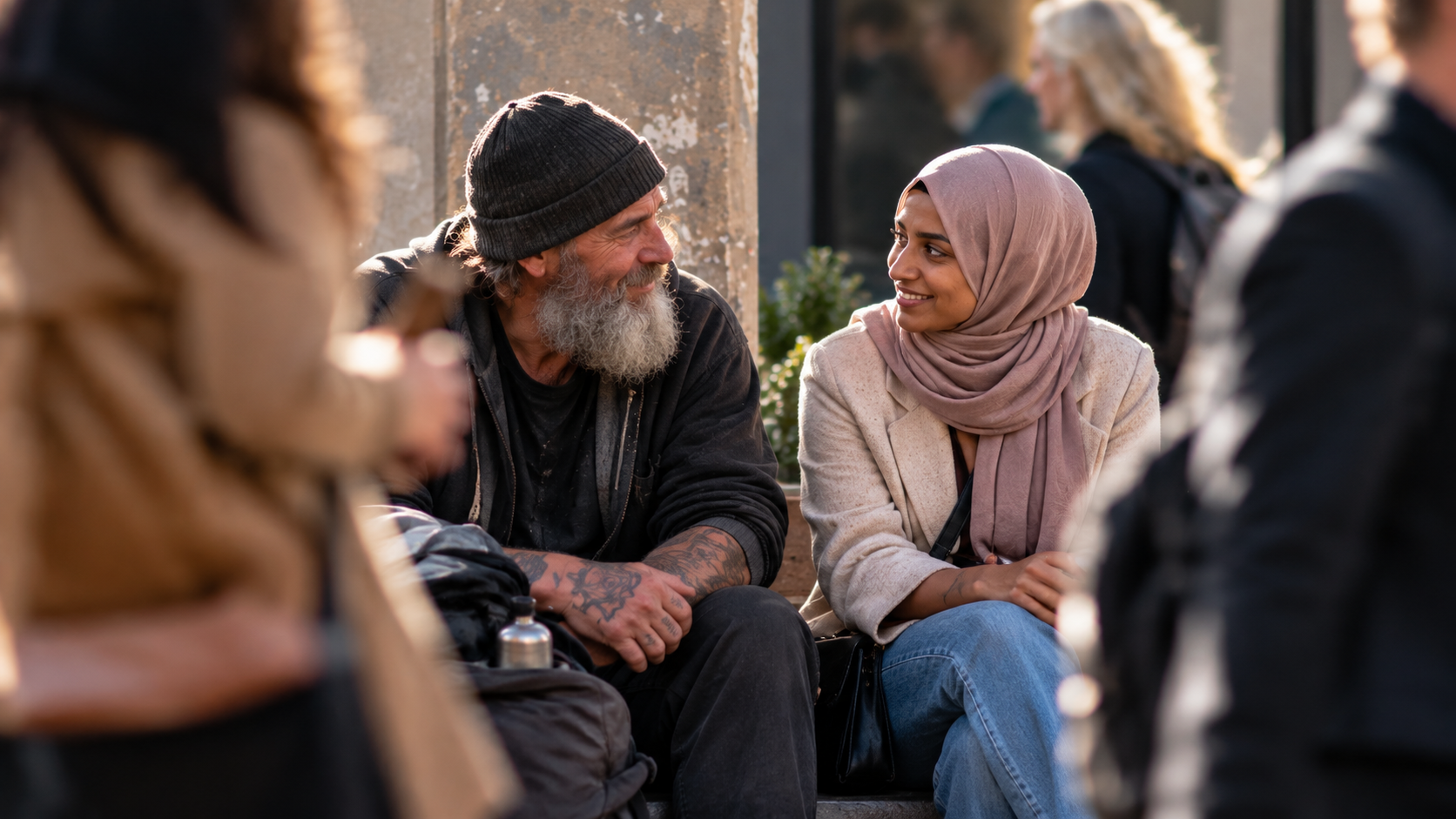
This week, notice someone you normally recognise only by a role, a label or a first impression.
It might be a cashier, a person using a wheelchair, someone whose English is different from yours, a neighbour you have never spoken to, or someone you simply pass every day.
Start one genuine conversation. Ask one question that invites them to share something about themselves. Listen without trying to fix, compare or assume.
At the end of the week, ask yourself:
Did I discover something about them that I never would have known if I’d stopped at what I could see?
Because every person has a story that begins beyond first impressions.
When someone’s life changes, we do not have to decide who they have become.
We can stay long enough to find out.
Watch my conversation with Kijuan Amey on Chocolate & Coffee Break: A Compassionate Proposition:
https://youtu.be/PQrt-ZTduvw
Pour yourself a cuppa, grab your favourite chocolate and join the conversation.
Let Love Be the Loudest Voice.
Get in Touch with Us
We’d love to hear from you—share your thoughts or ask a question!